State of the Planet

News from the Columbia Climate School

Water6

  • Oroville Dam Crisis is a Call to Action on U.S. Water Infrastructure

    Oroville Dam Crisis is a Call to Action on U.S. Water Infrastructure

    Columbia Water Center director Upmanu Lall suggests that we see the Oroville crisis as a call to action to evaluate and address the challenges facing the nation’s dam infrastructure.

  • Drought and Fire Activity: What’s Climate Change Got to Do with It?

    Drought and Fire Activity: What’s Climate Change Got to Do with It?

    Lamont-Doherty Earth Observatory scientist Park Williams, recipient of a Center for Climate and Life Fellowship, is investigating the influence of climate change on droughts and wildfires.

  • Learning from El Niño as La Niña Odds Rise

    Learning from El Niño as La Niña Odds Rise

    Although El Niño is weakening, its ramifications continue to be felt around the world. Drought and resulting food insecurity is one of the major implications for southeast Asia, eastern and southern Africa, Central America and the Caribbean. Sixty million are in need of emergency relief today, according to the United Nations.

  • Learning from a River’s History to Prepare for the Future

    Learning from a River’s History to Prepare for the Future

    Researchers from eight universities, including Columbia University, are using tree ring and glacier analysis to reconstruct the climate history of the Missouri River Basin in order to give policymakers and water managers better decision-making tools to manage the river.

  • Copy Cat!: Fighting the Global Water Scarcity Issue

    Copy Cat!: Fighting the Global Water Scarcity Issue

    According to the World Water Management Institute, over one-third of the human population is affected by water scarcity. Advances in physical understanding, its applications, and the study of our environment and bio-mimicry help us develop more effective ways to fight freshwater scarcity around the world.

  • Investigating Water Quality and Arsenic in Bangladesh

    Investigating Water Quality and Arsenic in Bangladesh

    Postcard from the Field: Lamont-Doherty Earth Observatory graduate student Rajib Mozumder, who works with Lamont scientists Lex van Geen and Ben Bostick, has spent part of his summer drilling water wells and collecting samples in Bangladesh.

  • Partnering for Change: Columbia Water Center Collaborates on World Water Day

    Partnering for Change: Columbia Water Center Collaborates on World Water Day

    In celebration of World Water Day 2014, the Columbia Water Center is partnering with several companies to bring attention to water stress and discuss innovative solutions to global water challenges.

  • Columbia Aquanauts Hope Passion for Water Issues Has Ripple Effect

    Columbia Aquanauts Hope Passion for Water Issues Has Ripple Effect

    Last spring, the pressing issue of water prompted a passionate group of Columbia graduate students across a variety of disciplines to band together and form the Columbia Aquanauts. As the only club on campus focusing on water management, the Aquanauts aim to build a space where students can not only discuss their views and knowledge…

  • Managing Water in a Dry Land

    Managing Water in a Dry Land

    Since 2010, the Earth Institute’s International Research Institute for Climate and Society along with UNESCO and their colleagues in Chile have been working with Elqui’s water authority to help them use seasonal forecasts as way to better allocate water and prepare for droughts.

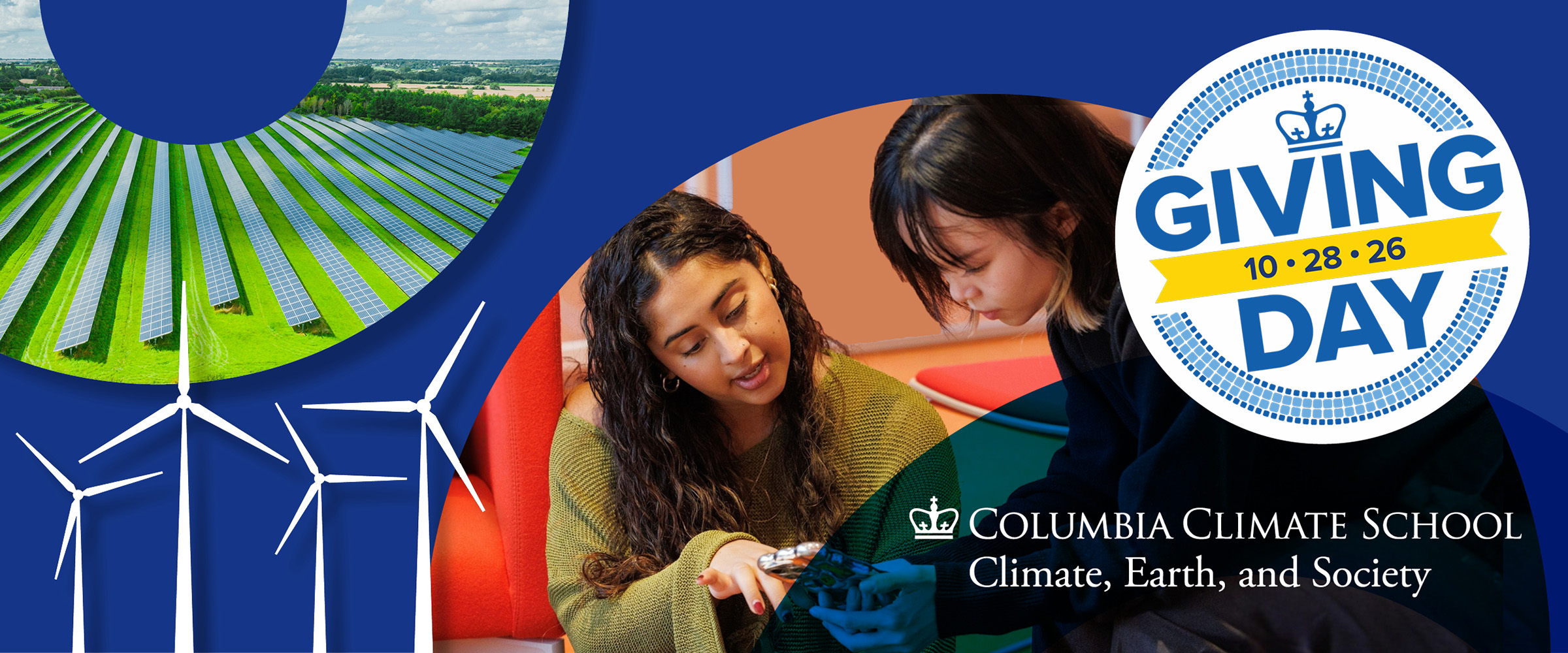
Columbia Climate School Giving Day on October 28, 2026, featuring students and renewable energy imagery

October 28, 2026 is Columbia Giving Day! Your gift to Columbia Climate School helps advance interdisciplinary research, educate the next generation of leaders, and transform bold ideas into real-world solutions for climate, Earth, and society.

  • Oroville Dam Crisis is a Call to Action on U.S. Water Infrastructure

    Oroville Dam Crisis is a Call to Action on U.S. Water Infrastructure

    Columbia Water Center director Upmanu Lall suggests that we see the Oroville crisis as a call to action to evaluate and address the challenges facing the nation’s dam infrastructure.

  • Drought and Fire Activity: What’s Climate Change Got to Do with It?

    Drought and Fire Activity: What’s Climate Change Got to Do with It?

    Lamont-Doherty Earth Observatory scientist Park Williams, recipient of a Center for Climate and Life Fellowship, is investigating the influence of climate change on droughts and wildfires.

  • Learning from El Niño as La Niña Odds Rise

    Learning from El Niño as La Niña Odds Rise

    Although El Niño is weakening, its ramifications continue to be felt around the world. Drought and resulting food insecurity is one of the major implications for southeast Asia, eastern and southern Africa, Central America and the Caribbean. Sixty million are in need of emergency relief today, according to the United Nations.

  • Learning from a River’s History to Prepare for the Future

    Learning from a River’s History to Prepare for the Future

    Researchers from eight universities, including Columbia University, are using tree ring and glacier analysis to reconstruct the climate history of the Missouri River Basin in order to give policymakers and water managers better decision-making tools to manage the river.

  • Copy Cat!: Fighting the Global Water Scarcity Issue

    Copy Cat!: Fighting the Global Water Scarcity Issue

    According to the World Water Management Institute, over one-third of the human population is affected by water scarcity. Advances in physical understanding, its applications, and the study of our environment and bio-mimicry help us develop more effective ways to fight freshwater scarcity around the world.

  • Investigating Water Quality and Arsenic in Bangladesh

    Investigating Water Quality and Arsenic in Bangladesh

    Postcard from the Field: Lamont-Doherty Earth Observatory graduate student Rajib Mozumder, who works with Lamont scientists Lex van Geen and Ben Bostick, has spent part of his summer drilling water wells and collecting samples in Bangladesh.

  • Partnering for Change: Columbia Water Center Collaborates on World Water Day

    Partnering for Change: Columbia Water Center Collaborates on World Water Day

    In celebration of World Water Day 2014, the Columbia Water Center is partnering with several companies to bring attention to water stress and discuss innovative solutions to global water challenges.

  • Columbia Aquanauts Hope Passion for Water Issues Has Ripple Effect

    Columbia Aquanauts Hope Passion for Water Issues Has Ripple Effect

    Last spring, the pressing issue of water prompted a passionate group of Columbia graduate students across a variety of disciplines to band together and form the Columbia Aquanauts. As the only club on campus focusing on water management, the Aquanauts aim to build a space where students can not only discuss their views and knowledge…

  • Managing Water in a Dry Land

    Managing Water in a Dry Land

    Since 2010, the Earth Institute’s International Research Institute for Climate and Society along with UNESCO and their colleagues in Chile have been working with Elqui’s water authority to help them use seasonal forecasts as way to better allocate water and prepare for droughts.