Climate296
-
On the Surface of Climate Change
Blog Action Day 2009’s theme this year is Climate Change. Thousands of people on blogs all over the world are writing today on this single issue, and the Columbia Water Center is joining them. On Climate In a recent study at Columbia University, correlations were drawn between sea surface temperature on the coast of Africa…
-
Test Flight
Nick Frearson, Gravimeter Instrument Team, Lamont-Doherty Earth Observatory: The flight engineer ticks off instruments over the intercom. “LVIS, ready.” “Gravity, ready.” “DACOM, ready.” We are about to take the DC-8 on its first test flight before Antarctica. The pilots, clipped and professional, have just described the day’s flight plans and the plane is bustling with…
-
Climate News Roundup – Week of 10/4
Food Prices May Rise 121% by 2050 Due to Climate Change, Business Standard A report released on Wednesday by the International Food Policy Research Institute outlines the threats to agricultural security posed by climate change. Food prices, already expected to increase significantly by 2050, could rise further as the effects from climate change continue to…
-
Food Security Under Climate Change
In 2008 the world faced one of its most severe food crises in recent history. Around the world riots broke out in otherwise food-secure nations — places like Egypt, Russia, Mexico, and Brazil. The world’s governments responded — a major U.N. conference was held in Geneva. What they discussed there was the fundamental issue of…
-
Climate News Roundup – Week of 9/27
Gordon Brown’s $100 bn Climate Aid Proposal is ‘Only First Offering‘, guardian.co.uk Prime Minister Gordon Brown proposes $100 billion in future aid to countries struggling to adapt to climate change. The compensation, which could rise to a higher number as international negotiations continue, would be supplied by “rich” nations in a timeframe extending to 2020.…
-
‘Killer’ Southeast Drought Low on Scale, Says Study
Others Were Far Worse; Population, Planning Are the Real Problems
-
Thinking on Your Feet on the Ice
Nick Frearson, Gravimeter Instrument Team, Lamont-Doherty Earth Observatory: I’m a senior engineer at Columbia University’s Lamont Doherty Earth Observatory, and my role in Operation Ice Bridge is to work with the gravimeter. This instrument can see beneath ice sheets into the water and bedrock below to reveal the ice sheet’s hidden contours – critical information…
-
A New Way to Experience Antarctica
Michael Studinger, Instrument Co-Principal Investigator, Lamont-Doherty Earth Observatory: The scale and style of Operation Ice Bridge will be a new experience for me. I’ve been involved in airborne research for more than a decade using ice-penetrating radar systems, airborne laser scanning, gravity and magnetics to learn more about the polar ice caps and how they…
-
Climate News Roundup – Week of 9/19
Denver to Barcelona: Global Cities and Greenhouse Gas Emissions, ScienceDaily ACS’ Environmental Science & Technology is publishing a new study in October identifying which cities are producing the greatest levels of greenhouse gases. Denver was number one on the list, followed by Los Angeles, Toronto, Cape Town, and Bangkok. Researchers identified high electricity and heating…
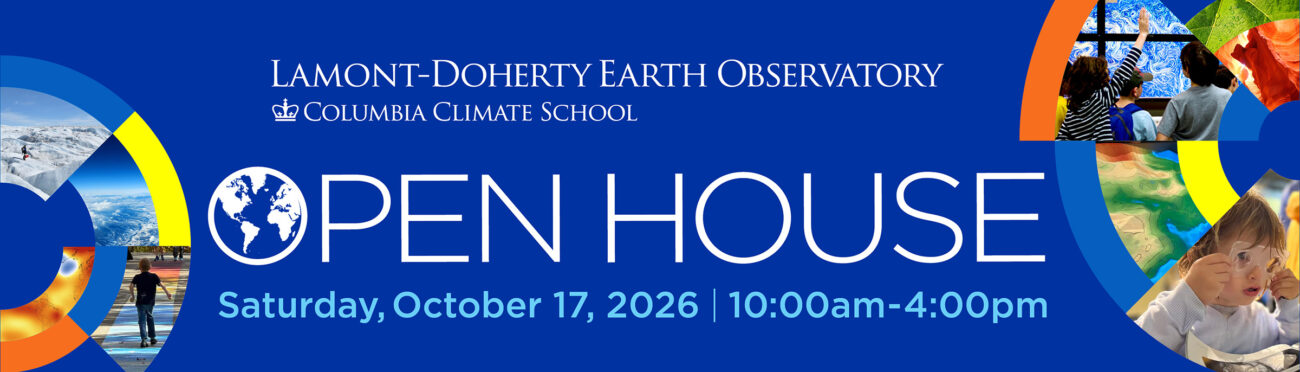
On Saturday, October 17, 2026 from 10am to 4pm, Lamont-Doherty Earth Observatory Open House—our biggest, best science fun and discovery event of the year—will take place on our beautiful campus in Palisades, NY. Mark your calendar and join us for this free, family-friendly celebration of science! RSVP Today!