Climate38
-

Adapt or Retreat? Conference Will Explore Questions of Habitability in a Changing World
At Columbia Climate School’s Managed Retreat conference, local and international academics, scientists, and community members will join representatives from different sectors to discuss managed retreat, habitability, and climate justice.
-

Improving Market Design for Energy Storage
A new study finds that electricity market design is the key to trade-offs between more affordable energy and lower carbon emissions.
-

New Tool Monitors Implementation of Climate Leadership and Community Protection Act
New York’s climate law is one of the strongest in the world. A new tracker helps to understand progress in implementing it.
-

The Fire This Time: Facing the Reality of Climate Change
While our short-term response to extreme weather must remain on adaptation, in the long run, we need to understand the reality of the warmer planet we live on and work to mitigate climate change.
-

AI’s Growing Carbon Footprint
Artificial intelligence has the potential to develop game-changing ways to fight climate change — but only if we can find ways to cut its carbon emissions.
-

How Wildfire Smoke Can Travel Thousands of Miles, and How to Protect Yourself
Columbia Climate School experts comment on the dangerous air pollution from Canadian wildfires.
-

State Farm’s California Pullout: What It Means for Climate Adaptation and Communities
Do decisions like State Farm’s aid in moving people out of harm’s way? Climate School experts discuss.
-

Announcing a New Podcast: DoveTale
Science and technology alone cannot solve climate change. The DoveTale podcast explores the interconnecting ethical, spiritual, psychological, moral, artistic, and historical dimensions of on-the-ground climate action.
-

Montreal Protocol Is Delaying First Ice-Free Arctic Summer
New research from Columbia climate scientists shows that the 1987 ozone treaty, designed to protect the ozone layer, has postponed the occurrence of the first ice-free Arctic by as much as 15 years.


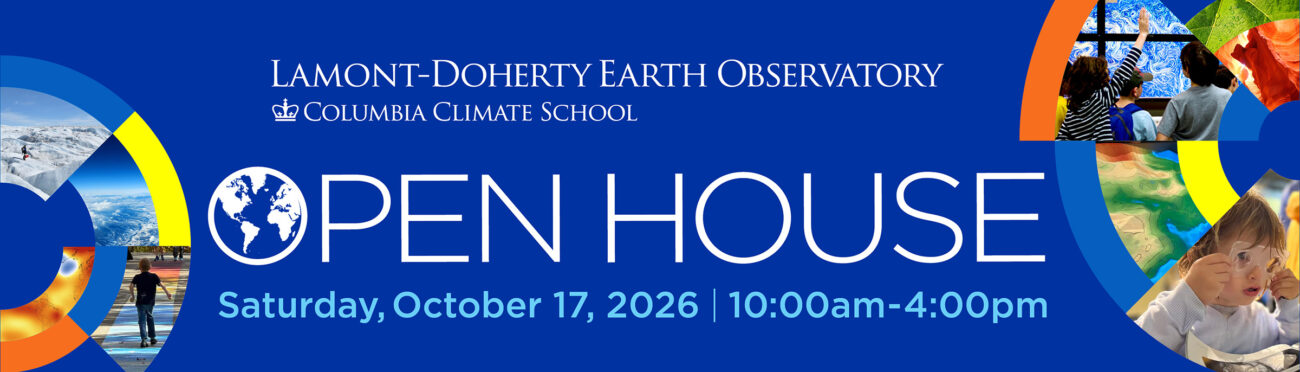
On Saturday, October 17, 2026 from 10am to 4pm, Lamont-Doherty Earth Observatory Open House—our biggest, best science fun and discovery event of the year—will take place on our beautiful campus in Palisades, NY. Mark your calendar and join us for this free, family-friendly celebration of science! RSVP Today!
