Climate70
-
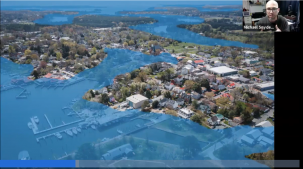
Are Buyouts a Viable Tool for Climate Adaptation?
At this year’s Managed Retreat conference, experts discussed the limitations and future potential of government buyout programs.
-

Summer Forecast: Dangerous Heat, Fire, and an Active Hurricane Season
Climate change may be loading the dice for a tough summer.
-

Scientists Track the Sudden Disappearance of an Antarctic Ice-Shelf Lake
A rarely seen phenomenon may not bode well for the future survival of the ice.
-

New Guidance Gives National Parks Tools to Make Tough Decisions on Climate Change
Guidance released in April aims to have parks incorporate climate change scenarios into all future planning, recognizing that it won’t be possible to save everything.
-

New Report on U.S. Climate Litigation in the Age of Trump
The new white paper takes stock of 378 U.S. climate cases that responded or interacted with federal policy and law during the Trump administration.
-

Artist Maya Lin Presents Major New Works Addressing Climate Change
In a talk on June 10, she discussed “Ghost Forest” and “What Is Missing,” two pieces that address loss from climate change and potential solutions.
-

Is Climate Change Putting the Future of Coffee at Risk?
At the African Fairtrade Convention, the International Research Institute for Climate and Society and Fairtrade will raise a red flag in a panel conversation on the intersection of human rights, climate change and coffee.
-

Which Areas Will Climate Change Render Uninhabitable? Climate Models Alone Cannot Say
Understanding how people will respond to climate dangers depends not only on top-down data, but also on bottom-up community engagement.
-

Why We Will Meet the Challenge of the Climate Crisis
Technology solves problems and creates problems, and then new technology is needed to solve the problems created by earlier technologies. It’s an endless cycle.


The first Earth Day in 1970 ignited a movement to stop polluting our planet. Today, our scientists and experts are tackling the most pressing challenges to achieve real-world impact. This Earth Day, join us in our commitment to realizing a just and sustainable future for our planet. Visit our Earth Day website for ideas, resources, and inspiration.
