Earth Sciences21
-

Return of the R/V Pelican to Ocho Rios, Jamaica
The expedition discovered stresses along an underwater plate boundary and a record of historic and pre-historic earthquakes, which will shed light on the geohazard risks for Jamaica and Haiti.
-

Professor Nicholas Christie-Blick Named 2021 AAAS Fellow
The professor of earth and environmental sciences is one of five Columbia faculty recently recognized by the American Association for the Advancement of Sciences.
-

Looking at the Seafloor Without Water
Along the Enriquillo fault, large-scale submarine landslides provide possible evidence of earthquakes.
-

High Winds, Rough Seas, and Winch Problems
Researchers studying earthquake hazards in the Caribbean faced several challenges at sea, from rough weather to equipment failures.
-

Mapping Offshore Faults in Kingston Bay
Motion along these faults is associated with the 1907 Kingston earthquake, which shook the capital of the island with a magnitude of 6.2
-

Into the Sundarban Mangrove Forest and Back
For the last week of our trip, we traveled by boat to reach the sites where we are measuring subsidence in the Sundarban Mangrove Forest and nearby embanked islands.
-

The R/V Pelican Sets Sail, and Data Collection Begins
Researchers are mapping the seafloor and subseafloor between Haiti and Jamaica, to evaluate the potential for earthquakes.
-

Marco Tedesco: Snow Man
Although his parents wanted him to become an electrical engineer, Tedesco felt drawn to a life of research. Then he fell in love with snow. Now he is among the most well-respected and quoted polar experts in the world.
-

From Barisal to Khulna
We continued to service our GNSS and RSET-MH equipment measuring land subsidence in coastal Bangladesh. Long distances, poor roads and slow ferries made for very long days, but we were able to complete the work at the sites.


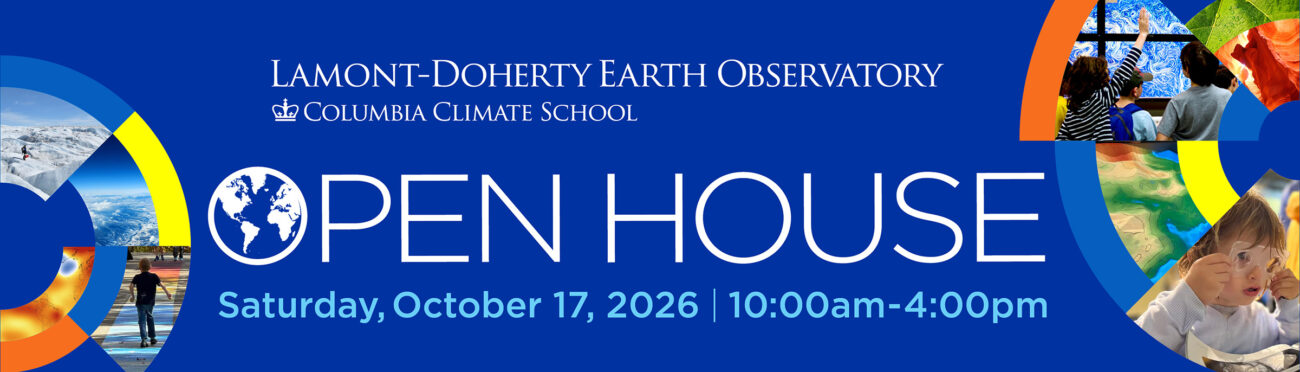
On Saturday, October 17, 2026 from 10am to 4pm, Lamont-Doherty Earth Observatory Open House—our biggest, best science fun and discovery event of the year—will take place on our beautiful campus in Palisades, NY. Mark your calendar and join us for this free, family-friendly celebration of science! RSVP Today!
