Natural Disasters15
-
Climate-Fueled Extreme Weather: Protection, Recovery, and Reconstruction
When a weather disaster happens every hundred years, it is an emergency. When it happens every year, it is a routine, periodic occurrence from which we need to protect ourselves.
-

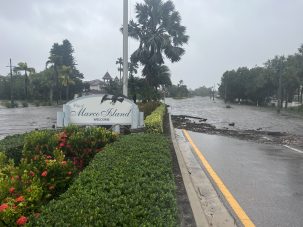
Catastrophe Looms as Surge From Hurricane Ian Meets Fast-Growing Florida
This is a worst-case clash between an explosive storm and communities that grew explosively in a hurricane hiatus.
-

Catching the Next Eruption of Axial Volcano
Diary entries from a research expedition that deployed seismometers on the ocean floor in hopes of recording the next eruption of a submarine volcano.
-

Training for Dixie Fire Survivors Sheds Light on the Long Road to Recovery
One year after the devastating wildfire, residents of Greenville, Calif., are working to rebuild. Experts from the National Center for Disaster Preparedness co-hosted a training to facilitate the process.
-

The Flood Seen From Space: Pakistan’s Apocalyptic Crisis
Flooding is not uncommon for Pakistan, but the current crisis is simply unprecedented.
-

Caroline Juang: Blending Art, Science, and Outreach
In addition to studying climate-related hazards, Juang is a talented artist who helps make STEM fields more accessible for underrepresented minorities. Somehow, she also finds time to sleep.
-

Is Air Pollution Fueling Stronger Thunderstorms? Project Aims to Find Out
In Houston, researchers are studying how air pollution particles affect the strength and lifecycle of storms in order to improve weather and climate forecasting.
-

Multiform Floods: A Growing Climate Threat
When different types of floods occur in close succession or simultaneously, the challenges to communities can be immense.
-

Balancing Act: Can Precariously Perched Boulders Signal New York’s Earthquake Risk?
Long ago, melting glaciers dropped giant boulders onto surfaces in the New York City exurbs, and many seem to remain in their original, delicately balanced positions. Can they be used to judge the maximum sizes of past earthquakes?


On Saturday, October 17, 2026 from 10am to 4pm, Lamont-Doherty Earth Observatory Open House—our biggest, best science fun and discovery event of the year—will take place on our beautiful campus in Palisades, NY. Mark your calendar and join us for this free, family-friendly celebration of science! RSVP Today!
